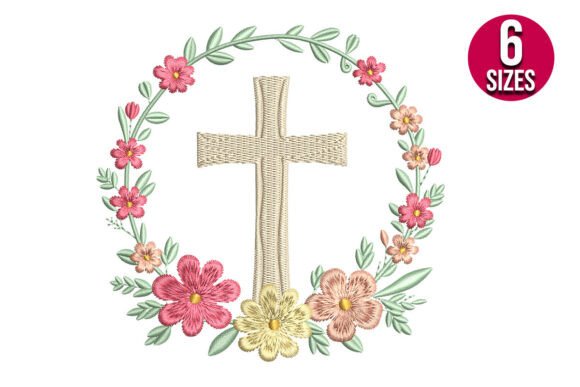
Cross with Floral Wreath
First Impression: Elegant, Timeless, and Quietly Devotional
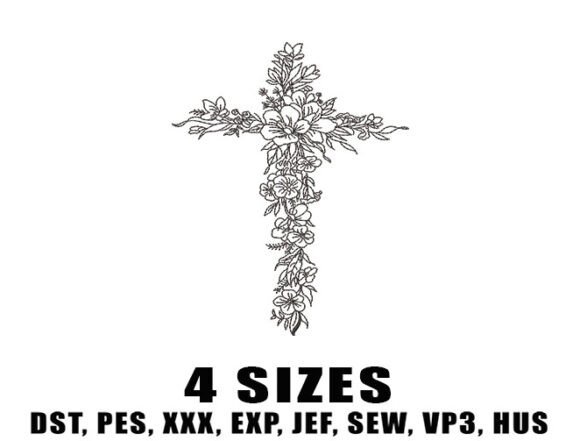
As an embroidery designer who’s prepped over 200 craft fair booths—and shipped thousands of digital embroidery files to Etsy sellers and boutique makers—I immediately recognize Cross with Floral Wreath as a design that leans into quiet reverence rather than bold statement. It’s not kitschy, not minimalist, and definitely not trendy in a fleeting way. It reads as elegant, with soft floral movement framing a centered cross—evoking Easter mornings, baptismal gowns, or a grandmother’s linen closet. That balance makes it unusually versatile: it feels at home in farmhouse kitchens and modern faith-based boutiques alike.
Where It Shines on Craft Fair Products
In my booth setup, Cross with Floral Wreath consistently draws attention on three key items: tea towel embroidery, embroidered patches, and pillow covers. On tea towels, the wreath’s organic flow complements natural cotton texture without competing—especially when stitched in tonal ivory-on-cream or sage-on-linen. As a patch, it holds up beautifully on denim jackets or canvas market bags, offering subtle spiritual identity without overt signage. And on 16” pillow covers? It becomes a centerpiece—soft but intentional, perfect for nursery shelves or guest room accents.
It also works well on apron embroidery, especially bib-style aprons where the cross sits just below the neckline—elegant but unobtrusive. For tote bag design, I recommend placing it centered on the lower third (not top-center), letting the florals drape downward like a gentle gesture. Avoid large-scale repeats on tote fronts unless you’re using a high-thread-count canvas; stitch density matters here.
What Holds It Back—And How to Work Around It
This isn’t a “throw-it-on-anything-and-go” machine embroidery design. Its floral wreath introduces delicate petal shapes and layered stems—so tiny details can blur on textured towels or thick fabrics like duck cloth or heavy twill. On curved surfaces—like caps—the outer wreath may distort if hooped too tightly or stitched without proper stabilizer support. And on dark fabric? The cross itself must be stitched with high-contrast thread (e.g., white or ecru on navy) to retain legibility—thread colors aren’t optional here.
At under 3” wide, Cross with Floral Wreath loses definition. So skip using it as a tiny accent on keychains or wristlet tags. It needs breathing room: aim for 4–6” minimum on finished products. That means it’s not ideal for small pouches unless they’re structured and front-facing—think zippered clutch backs, not drawstring sachets.
Photography, Listings, and Online Appeal
This design photographs exceptionally well for Etsy seller listings and printable mockups. Its symmetry and clean negative space translate clearly across devices—even on mobile thumbnails. When styled with dried lavender, linen napkins, or matte ceramic mugs, it signals handmade quality without shouting. Buyers scanning quickly still register its intention: faith, care, craftsmanship. That emotional resonance lifts perceived value—making it easier to price above commodity-level embroidery.
For digital embroidery file sellers, include real-world context in your listing: show it stitched on tea towels *and* as a sew-on patch. Mention compatible formats (PES, PEC, JEF, SEW) early—crafters scan for those first. And always note recommended hoop size: while not specified in the description, test it before batch production—most versions of this motif fit comfortably in a 5x7 hoop, but some floral variants push into 6x10.
Booth Strategy & Customer Engagement
At craft fairs, Cross with Floral Wreath performs best when paired—not isolated. Display it beside complementary designs (a simple dove, a monogrammed scripture verse, or a neutral botanical border) to suggest cohesive collections. Customers love building sets: “I’ll take the cross towel, the matching pillow, and the patch for my daughter’s backpack.” That upsell potential is real.
It also invites conversation—not debate. I’ve watched shoppers pause, smile softly, and say, “That reminds me of my aunt’s altar cloth.” That warmth builds trust and encourages repeat visits. Unlike edgy or ironic designs, this one doesn’t polarize—it welcomes. That’s gold in a crowded handmade market.
Production Notes Every Embroidery Designer Should Follow
- Always test on scrap fabric—especially if stitching on terry cloth, burlap, or textured linen.
- Check thread contrast before running full batches. A pale yellow cross on oatmeal fabric may vanish.
- Review spacing between floral elements: tight loops or overlapping petals can cause thread nests if tension isn’t dialed in.
- Confirm stabilizer type: medium-weight cutaway works best for apparel; tear-away suffices for stable home goods like tea towels.
- Create at least one real mockup—not just a digital preview. Light, fabric drape, and thread sheen change everything.
- Compare how it looks on light vs. dark fabric swatches; adjust fill densities if needed.
- Verify commercial licensing before selling finished products—this is essential for small shop product and commercial embroidery use.
Final Verdict: A Thoughtful Anchor for Faith-Based Handmade Brands
Cross with Floral Wreath isn’t flashy—but that’s its strength. In a sea of loud logos and seasonal trends, it offers grounded elegance. It elevates handmade product credibility, supports brand consistency for faith-inspired shops, and strengthens booth display cohesion. It’s not the fastest-seller on Day One—but it’s often the most reordered, gifted, and remembered.
For craft fair product planning, prioritize it on kitchen textiles and soft home goods first. Use it to signal care, continuity, and quiet conviction. And remember: in embroidery, restraint often sells louder than volume. This design understands that—and so will your customers.