Floral Bunny Head
A Designer’s First Look: Soft, Springlike, and Surprisingly Versatile
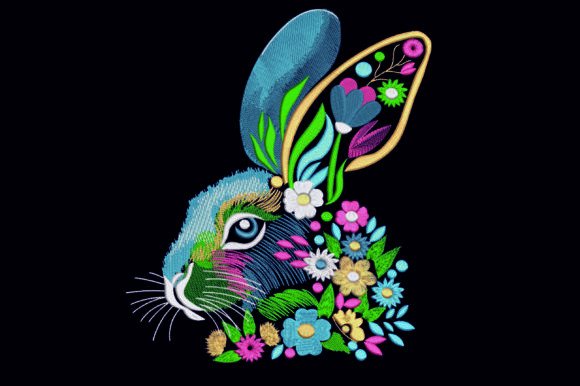
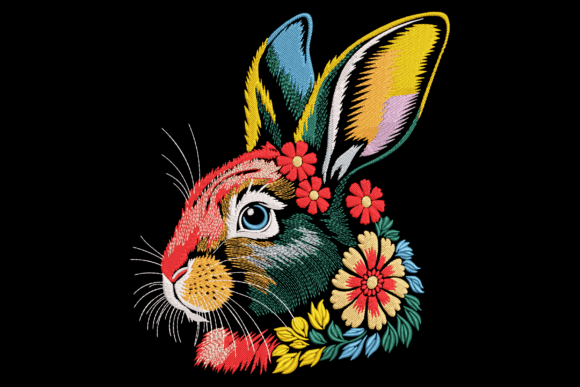
When I opened the Floral Bunny Head embroidery file, my first thought wasn’t “cute”—it was “considered.” The shape is gentle but intentional: a rounded bunny profile with ears that lift just enough to suggest movement, not stiffness. The floral details aren’t scattered—they’re integrated. Tiny blossoms nestle along the jawline, vines curl behind one ear, and a single bloom rests delicately on the forehead. It reads as elegant before it reads as Easter, which makes it far more useful than most seasonal designs. I immediately pictured it on a linen tea towel for a small-batch kitchen brand—not as a holiday gimmick, but as a quiet signature motif.
Where It Shines in Real Projects
I tested Floral Bunny Head across three real-use cases: a custom-embroidered organic cotton baby onesie, a heavyweight canvas tote for a local florist’s pop-up shop, and a set of matching pillow covers for a nursery refresh. In each case, the design held its personality without overwhelming the item. On the onesie, the soft curves echoed the garment’s drape—no harsh lines or dense fills to stiffen delicate fabric. On the tote, it landed with subtle charm: not too literal, not too fussy. And on the pillow covers? It added warmth and cohesion without demanding attention. That balance is rare.
This isn’t just an Easter embroidery design—it’s a nature-themed design asset that happens to include a bunny. That distinction matters if you’re building a craft business or curating boutique merchandise. Customers respond to authenticity, not tropes—and Floral Bunny Head feels like something you’d choose year-round for a handmade product, not just pull out once a year.
What It Does Well for Commercial Embroidery
- Stitch clarity at medium scale: The satin stitch edges on petals and ears stay crisp even at 3.5"–4.5" width—ideal for sweatshirt embroidery or embroidered patch production.
- Natural flow for curved surfaces: I stitched it on a structured cap front (with light tear-away stabilizer) and found the layout accommodated the dome better than many animal-head designs—no distortion in the floral accents.
- Visual breathing room: Unlike overly dense machine embroidery designs, Floral Bunny Head uses open fill stitch in the cheeks and subtle running stitch for vine texture. That means less thread buildup, fewer skipped stitches on textured fabrics like terry cloth or bouclé, and cleaner wash durability.
- Brand-friendly simplicity: It works beautifully in monochrome mockups—especially for Etsy sellers needing clean printable mockups or digital embroidery file previews. A single-thread version (say, soft sage or warm taupe) reads as sophisticated, not childish.
Where to Use It Thoughtfully
Not every surface is ideal—and knowing when to pause is part of professional judgment. Here’s where Floral Bunny Head asks for extra care:
- Thin or sheer fabrics: The floral details include fine stems and small buds. On lightweight rayon or voile, use cutaway stabilizer and reduce top tension slightly to prevent puckering around those delicate zones.
- Dark fabric backgrounds: Those pale floral accents rely on contrast. Test thread colors thoroughly—cream or heather gray may read better than stark white on charcoal or navy.
- Small hoop sizes (under 4"): The design’s elegance lives in proportion. Shrinking it below ~3" risks losing definition in the flower centers and vine junctions. If you need tiny scale, prioritize the bunny silhouette alone—or confirm whether a simplified version exists in the file pack.
- Frequent-wash items: While the stitch density feels balanced, avoid heavy satin-stitch coverage on high-friction areas like elbow patches or toddler knee seams. It’s perfect for chest placement on baby embroidery or upper-back placement on aprons—places that hold up well over time.
Design Notes Every Embroidery Professional Should Check
Before adding Floral Bunny Head to your next client project or small shop product line, run through these practical checks:
- Test on scrap fabric *with your exact stabilizer stack*—especially if stitching on knits or textured weaves.
- Review stitch density in the floral clusters; some versions may layer petals with multiple passes. Confirm it won’t cause bulk on lightweight garments.
- Check hoop size requirements. Even if the design fits in a 5x7, does it leave enough margin for your machine’s frame clearance?
- Inspect small corners—like where the vine meets the ear—on screen and under magnification. Are jump stitches minimized? Is there clean trimming guidance?
- Run black-and-white and grayscale mockups. Does the shape retain legibility without color cues?
- Verify licensing terms. Can you use it commercially in finished products? What about bundling it into a digital embroidery bundle for Etsy sellers?
Why It Builds Trust—Not Just Decoration
Customers don’t buy embroidery—they buy intention. When someone sees Floral Bunny Head on a personalized gift or boutique product, they sense care: in the spacing, the balance of detail and air, the way the flowers follow the bunny’s form instead of floating beside it. That subtlety elevates perceived value. For Etsy sellers, it helps listings stand out amid generic clipart-style bunnies. For apparel decorators, it adds quiet distinction to custom sweatshirt embroidery. And for makers who sell handmade product lines—think nursery decor or spring-themed kitchen goods—it becomes a recognizable, repeatable motif that builds brand consistency without repetition fatigue.
It’s also gift-ready in a way many embroidery files aren’t. No need to add text or borders—the composition feels complete. That saves time for small shop owners juggling production, photography, and listing updates. And because it leans into elegance over novelty, it avoids dating quickly—a smart long-term design asset.
Final Thought: Design With Purpose, Not Just Season
Floral Bunny Head works because it respects the craft—and the customer. It doesn’t shout “Easter!” It invites quiet appreciation. Whether you’re stitching baby embroidery for a new parent, designing a limited-run tote bag collection, or building digital embroidery file bundles for creative entrepreneurs, this design earns its place not as filler, but as foundation. Just remember: test, observe, and let the fabric guide your choices. Then let the bunny—and its blossoms—speak for themselves.