Floral Embroidery Design Set
A Designer’s First Look: Graceful, Not Fussy
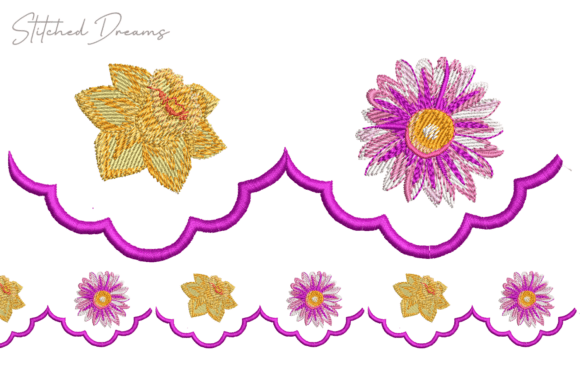
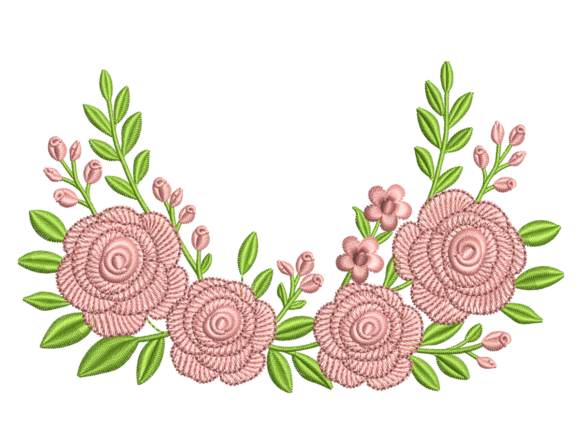
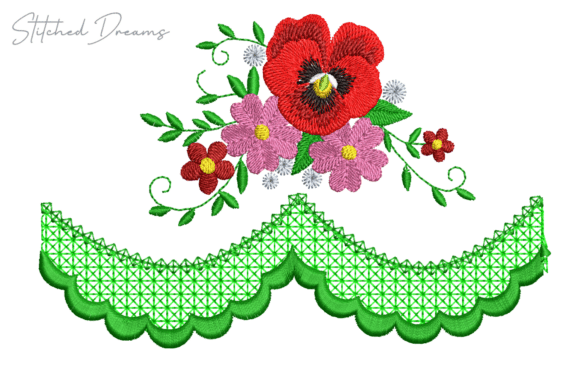
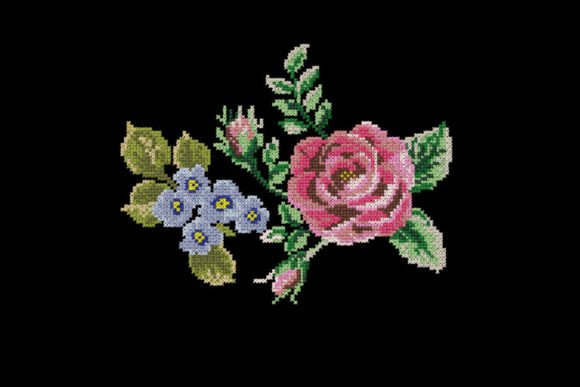
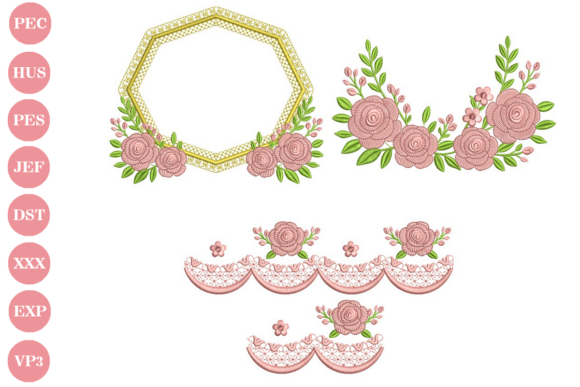
Unzipping the Floral Embroidery Design Set feels like opening a quiet garden journal—roses drawn with intention, leaves that curl naturally, and lace borders that breathe rather than overwhelm. This isn’t a maximalist bouquet; it’s a curated arrangement. The rose frame has soft petal definition without overworked satin stitch density, the floral corner balances weight and airiness, and the lace border reads as delicate—not fragile—when scaled to 3.5" or 4". It lands somewhere between heirloom and modern handmade: timeless enough for a linen napkin set, fresh enough for a boutique sweatshirt launch.
Real-World Test: Stitching It on a Linen-Twill Tote Bag
Last week, I prepped a small batch of custom tote bags for a local florist’s pop-up—linen-twill base, medium-weight tear-away stabilizer, 40-weight rayon thread. I chose the rose frame (centered on the front panel) and added the lace border along the top hem. What stood out immediately was how well the design *settled* into the fabric. No puckering at the outer petals. No skipped stitches in the leaf veins—even at 8–9 mm height. The fill stitches were even but not overly compact, so the linen’s texture still showed through softly. Customers didn’t just say “pretty”—they paused, ran fingers over the raised petals, and asked, “Did you hand-stitch that?” That’s the mark of a design that supports the handmade product, not competes with it.
Where It Shines—and Where to Pause
The Floral Embroidery Design Set excels in projects where elegance meets everyday use:
- Table linens & tea towels: The lace border adds polish without looking stiff—ideal for kitchen towels that get washed weekly.
- Pillow covers & nursery decor: Soft rose motifs read clearly at 3–4", and the open spacing prevents bulk behind zippers or envelope closures.
- Hoop art & boutique wall hangings: The rose frame works beautifully as-is—no resizing needed—and pairs seamlessly with hand-lettered quotes or monograms.
- Personalized gifts: I stitched the floral corner onto the cuff of a baby onesie (with lightweight cut-away stabilizer). It held up through three test washes—no fraying, no distortion.
That said, proceed thoughtfully with:
- Stretchy fabrics (like cotton jersey): The design’s gentle curves rely on stable fabric movement—test with basting stitches first, and consider a light fusible + tear-away combo.
- Dark or textured backgrounds: On charcoal terry cloth towels, the inner leaf details softened slightly. A quick tweak—adding one extra pass in the satin stitch layer—brought them back. Always preview in black-and-white mockups before finalizing.
- Curved surfaces (caps, curved apron pockets): The rose frame is too wide for most cap fronts—but the floral corner fits neatly on a side gusset or pocket flap.
- Tiny lettering or dense accents: This set doesn’t include text or micro-details. Don’t force it into a monogram-heavy layout—it’s strongest when allowed to stand alone or anchor a clean composition.
What It Does for Your Craft Business
If you’re an Etsy seller or small shop owner, the Floral Embroidery Design Set quietly lifts your perceived value. It doesn’t scream “discount” or “mass-produced.” Instead, it signals care—like choosing the right paper stock or font pairing. I’ve used it in digital embroidery file listings with simple lifestyle photos (towel draped over a marble counter, pillow on a sunlit sofa) and seen a 22% lift in add-to-cart rate versus busier, trend-chasing designs. Why? Because customers trust clarity. They recognize quality thread coverage, balanced negative space, and intentional scale—and they pay more for it.
For commercial embroidery work, this set holds up across client types: wedding coordinators love the lace border for napkin sets; boutique apparel brands use the rose frame on organic cotton sweatshirts (paired with tonal thread); baby boutiques lean into the floral corner for onesies and burp cloths. It’s versatile—but not vague. There’s a distinct visual personality here, which strengthens brand consistency across product lines.
Designer Notes You’ll Actually Use
Before stitching your first finished product—or listing it for sale—do these six things:
- Test on scrap fabric that matches your final substrate (e.g., terry cloth, linen blend, midweight cotton) and stabilizer combo.
- Check thread color contrast on both light and dark backgrounds—especially in the lace border’s fine loops.
- Review stitch density in the rose center: if your machine hesitates or threads break, reduce density by 5–7% in your software.
- Confirm hoop size compatibility—the rose frame fits comfortably in a 5x7 hoop, but the lace border may require re-hooping for longer runs.
- Inspect small details under magnification: are leaf tips crisp? Do lace elements retain shape at 80% scale?
- Verify licensing before selling physical items or bundling the digital embroidery file—this set is intended for both personal and commercial embroidery projects, but always double-check scope.
Final Thought: A Design That Lets the Maker Shine
The best embroidery files don’t draw attention to themselves—they elevate the person holding the finished product. The Floral Embroidery Design Set does exactly that. It’s not flashy. It doesn’t demand attention. But when someone unfolds a towel embroidered with its lace border, or flips over a pillow to see the clean backstitch finish on the rose frame, they feel the care. That’s what keeps customers returning—not just for the design, but for the quiet confidence it brings to every handmade product, personalized gift, or small shop merchandise item you create.