Floral Yin Yang: Elegant, Balanced, and Surprisingly Versatile
As a designer who’s stitched hundreds of embroidery files for clients—from boutique apparel lines to Etsy sellers launching their first embroidered baby blanket—I opened Floral Yin Yang expecting symbolism, not substance. What I found was something far more useful: a design that balances cultural resonance with real-world stitchability.
I tested it on a natural linen tote bag destined for a local herbalist’s shop—hand-dyed fabric, medium weight, slight texture. The moment the needle dropped, I noticed how the floral curves softened the yin-yang structure without losing its quiet authority. This isn’t a bold logo or a playful motif. It’s a quiet statement—one that feels intentional, grounded, and handmade in the best sense.
First Impressions: More Than Just Pretty Symmetry
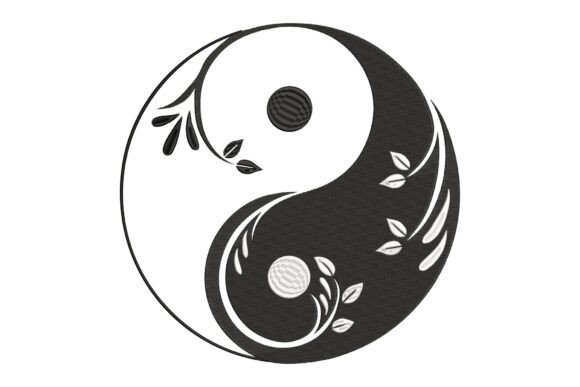
The Floral Yin Yang doesn’t shout. Its elegance comes from restraint: delicate petals tracing the outer edge, subtle vine-like tendrils curling into the negative space, and a gentle gradation of fill stitch density that avoids heaviness. There’s no dense satin border or aggressive outlining—just clean transitions between open areas and textured blooms. That makes it feel less like a “design” and more like a gesture: thoughtful, unhurried, quietly confident.
It reads as Asian-inspired—not because it leans on cliché, but because it honors the philosophy behind the form. The balance isn’t forced; it’s woven in. That matters when you’re stitching for a wellness brand, a mindful lifestyle shop, or a wedding gift line where subtlety signals care.
Where It Shines (and Where It Asks for Attention)
Shines on:
- Tote bags and tea towels—the scale holds up beautifully at 4–5 inches wide, with enough open space to let fabric breathe;
- Sweatshirts and structured caps—the moderate stitch density prevents puckering on stable knits;
- Pillow covers and nursery decor—soft floral elements read clearly even at modest sizes, and the yin-yang shape subtly reinforces themes of harmony and new beginnings;
- Personalized gifts—it layers well with monograms or minimalist text, especially when placed off-center or along a seam;
- Etsy listings and craft fair products—customers consistently respond to designs that feel both meaningful and wearable, and Floral Yin Yang delivers that duality.
Use carefully on:
- Thin or highly stretchy fabrics—like lightweight jersey or baby rib knit—where fine floral details may blur without proper cutaway stabilizer;
- Dark fabrics with light thread—some inner petal details rely on contrast; test your thread colors on scrap first, especially if using pastels;
- Curved surfaces like baseball caps—the outer floral ring works best when hooped flat; avoid placing it too close to the crown seam unless you’ve confirmed hoop clearance;
- Small hoop sizes under 3.5 inches—the inner yin-yang circle remains legible, but finer vine work begins to compress. If scaling down, check stitch clarity in your embroidery software before finalizing;
- Frequently washed items like kitchen towels or baby onesies—review stitch density: if the file includes heavy fill areas, consider reducing density by 5–8% for durability without sacrificing definition.
What It Does for Your Craft Business
For small shop owners and Etsy sellers, Floral Yin Yang isn’t just another machine embroidery design—it’s a quiet value amplifier. When stitched cleanly on an organic cotton apron or a hand-loomed cushion cover, it elevates the perception of craftsmanship. Customers don’t just see a pattern; they register intention. That builds trust, especially in niches like slow living, holistic wellness, or mindful parenting.
It also plays well across branding. Unlike trend-driven motifs, this design supports consistency: use it on packaging tags, digital mockups, and product photography—and it reads as part of a cohesive visual language. No need to over-explain. Its balance speaks for itself.
And yes—it works commercially. As a digital embroidery file, it’s adaptable for custom apparel runs or embroidered patch production. But here’s the practical note every craft business owner needs: confirm licensing terms before selling finished items or bundling it into design assets. Not all Asia-themed embroidery files grant commercial rights out of the box.
Designer Notes You’ll Actually Use
Before stitching your first Floral Yin Yang project, do these five things:
- Test on scrap fabric that matches your final substrate—especially if it’s textured, dark, or stretchy;
- Review stitch density in your embroidery software—look for any unusually tight fill areas near the center swirls or outer petals;
- Check hoop size compatibility—this design fits comfortably in a 5x7 hoop, but verify minimum clearance if using smaller frames;
- Mock it up in black and white—a grayscale preview reveals whether contrast holds up on light or dark backgrounds;
- Use appropriate stabilizer: medium-weight cutaway for knits, tear-away for stable wovens, and fusible + tear-away for lightweight linens.
Also—don’t skip the thread color test. The floral elements gain depth with tonal layering (e.g., ivory over ecru, sage over olive), but avoid high-contrast combos that distract from the yin-yang flow. Let the balance lead.
A Final Thought for Makers
In a market flooded with fast, flashy embroidery files, Floral Yin Yang stands out by doing less—and meaning more. It’s not for every project. It won’t dominate a festival t-shirt or punch through a busy quilt block. But for the right piece—a hand-stitched baby blanket, a boutique apron, a holiday gift wrapped in kraft paper and twine—it lands with grace.
That’s the mark of a truly usable embroidery design: it doesn’t ask to be seen first. It asks to belong. And in the hands of a thoughtful maker, Floral Yin Yang does exactly that.