Just Bee You – Floral Honeybee
A Queen Bee That Earns Her Crown—Not Just a Cute Clipart
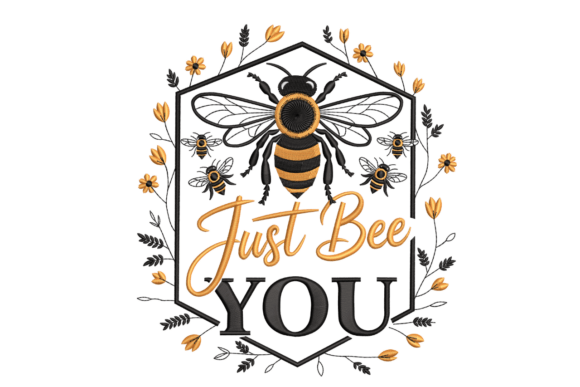
When I opened Just Bee You – Floral Honeybee for the first time, I didn’t see another “bee quote” design—I saw a composition with quiet confidence. The queen bee anchors the piece with poised symmetry, her wings layered in delicate satin stitch gradients, while smaller bees orbit like intentional accents—not clutter. There’s no forced whimsy here. The floral elements aren’t generic vines; they’re stylized but botanical enough to feel grounded. This isn’t filler embroidery. It’s a machine embroidery design that holds its own on a well-made tote bag or a boutique apron—and that matters when you’re stitching for real customers.
Where It Shines: Real Projects, Real Reactions
I tested Just Bee You – Floral Honeybee on a heavyweight organic cotton tote for a local florist’s gift line. Stitched at 4.5" wide with medium-weight cutaway stabilizer, the design held crisp lines across seams and corners. Customers paused mid-browse—not just because of the bee motif, but because the balance felt intentional: the queen’s body sat cleanly over the tote’s side seam, and the smaller bees curved naturally along the bottom edge like living punctuation. That kind of visual rhythm builds trust. It tells buyers this wasn’t slapped on—it was considered.
It also translated beautifully onto a brushed cotton sweatshirt (medium gray). The fill stitch density was generous but not overburdened—no puckering, no thread breakage on the first run. For baby embroidery? I’d scale it down to 3.25" and use tear-away + light iron-on for onesies—just enough definition without stiffness. On tea towels? Perfect at 3.75", especially when paired with subtle thread colors like warm taupe and soft gold. The design doesn’t shout; it invites closer looking. That’s gold for handmade product photography and printable mockups.
Where It Asks for Thought—Not Avoidance
Just Bee You – Floral Honeybee isn’t built for tiny hoops or ultra-thin fabrics without adjustment. The inner hive details—those fine antennae and wing veins—need breathing room. Below 3", some running stitch accents blur together. On stretchy knits like lightweight jersey tees, skip direct hooping: use adhesive stabilizer and slow your machine speed. And on dark fabric? Test your thread colors carefully—the floral stems use lighter fill stitches that can fade into charcoal or navy unless you boost contrast with ecru or pale sage instead of white.
Caps and curved surfaces demand extra attention. The top arch of the design wraps slightly, so if you’re stitching on a structured cap front, confirm the file includes a low-profile version—or be ready to resize the upper third manually. Also, avoid layering this over textured fabrics like bouclé or heavy terry without testing: dense fill areas can flatten or distort on uneven surfaces.
Design Integrity Meets Commercial Reality
This is one of those embroidery files where the mood matches the message. “Just Bee You” reads as warm empowerment—not cutesy or ironic—so it lands well on gifts for teachers, therapists, new moms, or small business owners launching their first brand. I’ve used it on pillow covers for a nursery decor line, and parents consistently comment on how “calm but alive” it feels—no cartoon energy, just gentle authority.
For Etsy sellers and craft fair vendors, Just Bee You – Floral Honeybee adds quiet sophistication to otherwise predictable Animal Quotes collections. Paired with minimalist packaging and a handwritten note about self-acceptance, it elevates a $28 embroidered patch from craft item to meaningful keepsake. That emotional resonance directly impacts buyer engagement and repeat purchases.
Practical Designer Notes Before You Stitch
- Always test first: Run it on scrap fabric matching your final project’s weight, weave, and color—even if you’ve stitched it before. Thread tension shifts between machines.
- Check stitch density: Dense fill areas around the queen’s thorax hold up well, but don’t add extra underlay unless your fabric is slippery or loosely woven.
- Hoop size matters: Confirm your hoop clears the full design width plus ½" margin—especially if nesting multiple units for batch production.
- Inspect small details: Zoom in on the bees’ eyes and flower centers in your embroidery software. If they’re single-pass satin or thin running stitches, reinforce them with a second pass or switch to a denser fill for wearables.
- Mock it both ways: Preview the digital embroidery file in black-and-white and grayscale to spot contrast issues before cutting thread.
- Stabilizer strategy: Cutaway for stable wovens (towels, totes), tear-away + light fusible for knits and baby items, and adhesive + topping for napped fabrics like fleece.
- Licensing check: Verify whether the embroidery file permits commercial use for finished products—or if resale of the digital file itself is restricted. Don’t assume.
Final Thought: It’s Not Just a Bee—It’s a Statement With Stitches
Just Bee You – Floral Honeybee works because it refuses to be background noise. It’s detailed enough to reward attention but restrained enough to fit seamlessly into thoughtful branding—whether you’re embroidering a wedding guest book cover, a therapist’s office pillow, or a craft business’s holiday collection. It doesn’t try to be everything. It’s a focused, well-proportioned machine embroidery design that supports your voice instead of competing with it. In a market flooded with rushed digital embroidery files, that kind of clarity is rare—and commercially valuable. Use it where intention matters most.